
REHABILITATION, CLOSURE, SOILS, WETLANDS & HYDROPEDOLOGY
Engineering tomorrow’s post-mining landscapes today
The challenge your business faces
At Digby Wells Environmental, we support clients in turning closure challenges into opportunities for long-term value creation. From project inception, we develop robust closure strategies that meet regulatory requirements and align with Good International Industry Practice (GIIP). Our multidisciplinary expertise addresses land degradation, water resource protection, biodiversity, and soil and wetland conservation through scientifically rigorous approaches. By integrating climate resilience, ecosystem restoration, and community expectations, we help transform degraded lands into sustainable post-mining assets that leave a positive legacy.
Our differentiated approach
As experts in progressive rehabilitation and closure planning globally, we deliver scientifically robust solutions aligned with both local regulations and international standards, including the Equator Principles and the International Finance Corporation (IFC) Performance Standards on Environmental and Social Sustainability.
Our cross-disciplinary team of soil scientists, hydropedologists, wetland specialists, rehabilitation specialists and closure experts bridges surface and subsurface hydrology for holistic land and water management.
We design closure strategies that minimise liabilities whilst creating lasting positive legacies, supported by defensible data, GIS tools and impact modelling.

OUR KEY SERVICES
Building the foundation for long-term stability
Mine closure & rehabilitation planning
Mine closure planning from concept to implementation, aligned with Good International Industry Practices (GIIP)
Closure cost assessments and financial provisioning to regulatory standards
Rehabilitation Strategy and Implementation Plans (RSIP) development
Post-closure monitoring programmes with measurable success criteria
Progressive rehabilitation tracking and contractor management
Integration with post-mining land use objectives and community transition planning
Soil & land management services
Soil, Land Use & Land Capability Assessments (Scoping to Impact Phase).
Land Contamination,
Fertility and Suitability Assessments for informed decision-making.
Comprehensive Topsoil
Management Plans including:
Soil stripping guides and mapping units, soil stockpile monitoring protocols, reuse strategies for rehabilitation success.
Erosion Assessment & Control Plans featuring: Site-specific erosion risk analysis, prevention and mitigation strategies, long-term stability monitoring.
Landscape and Land Use Planning aligned with zoning and agricultural compliance.
Landform design to restore ecosystem function and ensure stability.
Fertiliser recommendations for optimal vegetation establishment
Wetland services
Wetland Delineation & Classification using South African and International Classification Systems
Wetland Management Series applying the latest WRC methodologies
Wetland Offsetting Studies
and Mitigation Plans for no-net-loss outcomes
Passive wetland designs and constructed wetland implementation
Ecological Sensitivity Analysis & Mapping for informed planning
Wetland rehabilitation design and monitoring plans
Reports suitable for environmental authorisations, offset strategies, and financial due diligence
Hydropedology services
Comprehensive evaluation of soil, hydrology, hydrogeology and wetland interactions
Analysis of ARC Land Types and terrain characterisation
Delineation of hillslope catenas at the project scale for water flow understanding
Soil profiling aligned to the SA Soil Classification System (2018) and the FAO (2014)
Hydropedology risk assessment during all project phases
Survey methods guided by Water Research Commission (WRC) Hydropedology Guidelines (Van Tol et al., 2023)
Conceptual modelling of hydrological processes and flow paths
Quantitative analysis using models to estimate runoff and evapotranspiration under varying land-use scenarios
Integration with rehabilitation and closure water management strategies
Integrated planning tools
Landscape Plans – Tailored to restore ecosystem function post-disturbance
Land Use Plans – Aligned with regulatory zoning and agricultural compliance
Erosion Management Plans – With actionable control strategies and monitoring
Topsoil Management Plans – For conservation and optimal reuse of valuable soil resources
Water Management Integration – Linking soil-water dynamics to site-wide strategies
TECHNICAL EXCELLENCE
Science-driven performance
Our methodologies combine international best practice with local expertise
Regulatory compliance & standards
Full alignment with South African and international regulatory frameworks.
Compliance with IFC Performance Standards and Equator Principles (2020).
Adherence to Good International Industry Practice (GIIP).
Application of the SA Soil Classification System (2018) and FAO (2014) standards.
Implementation of WRC Hydropedology Guidelines (Van Tol et al., 2023).
Advanced technical capabilities
Scenario modelling for closure options assessment and cost optimisation
Multispectral imagery for rehabilitation monitoring
Soil carbon sequestration potential assessments for climate mitigation
GIS-based ecological sensitivity mapping and land use planning
Hydrological process modelling for water resource protection
Impact modelling for risk assessment and management planning
Native seed collection and propagation protocols for biodiversity restoration
Integrated assessment approach
Cross-disciplinary collaboration between scientists, specialists, and legal experts
Holistic evaluation bridging surface and subsurface hydrology
Integration of ecological, social, and financial considerations
Alignment with site-specific ESG objectives and targets
MEANINGFUL RESULTS
Measurable impact delivered
REDUCE
closure liabilities through progressive rehabilitation
ACHIEVE
regulatory sign-off of rehabilitation areas
CREATE
permanent jobs through post-mining land use initiatives
Sequester
10,000+ tonnes CO2 through rehabilitation programmes
Purpose Driven
ESG & sustainability alignment
Our rehabilitation and closure services directly support your ESG commitments
Environmental leadership
– Nature-positive outcomes aligned with the Global Biodiversity Framework.
– Climate resilience through ecosystem restoration and carbon sequestration.
– Water stewardship through wetland protection and restoration.
– Circular economy principles in soil and material management.
Social responsibility
– Community transition planning for sustainable post-mining economies.
– Traditional land use integration and cultural heritage preservation.
– Local employment through rehabilitation programmes.
– Knowledge transfer and capacity building initiatives.
Governance excellence
– Transparent closure cost provisioning and financial assurance.
– Compliance with international standards and frameworks.
– Regular third-party audits and verification.
– Stakeholder-inclusive planning and monitoring.
Regulatory framework expertise
Deep understanding and application of:
National Environmental Management Act (NEMA) requirements
Financial Provisioning Regulations (2015) and updates
IFC Performances
Standard 1: Assessment & Management of E&S Risks & Impacts
Standard 2: Labor & Working Conditions
Standard 3: Resource Efficiency & Pollution Prevention
Standard 4: Community Health, Safety & Security
Standard 5: Land Acquisition & Involuntary Resettlement
Standard 6: Biodiversity Conservation & Sustainable Management of Living Natural Resources
Standard 7: Indigenous Peoples
Standard 8: Cultural Heritage
Equator Principles IV (2020) requirements
World Bank Environmental and Social Framework
International Council on Mining and Metals (ICMM) closure guidance
Global Industry Standard on Tailings Management (where applicable)
TRUSTED EXPERTISE
Why choose Digby Wells?
Whether your project is local or cross-border, Greenfield or closure-phase, Digby Wells ensures you meet environmental, social, and governance expectations to international standards whilst creating lasting positive legacies.
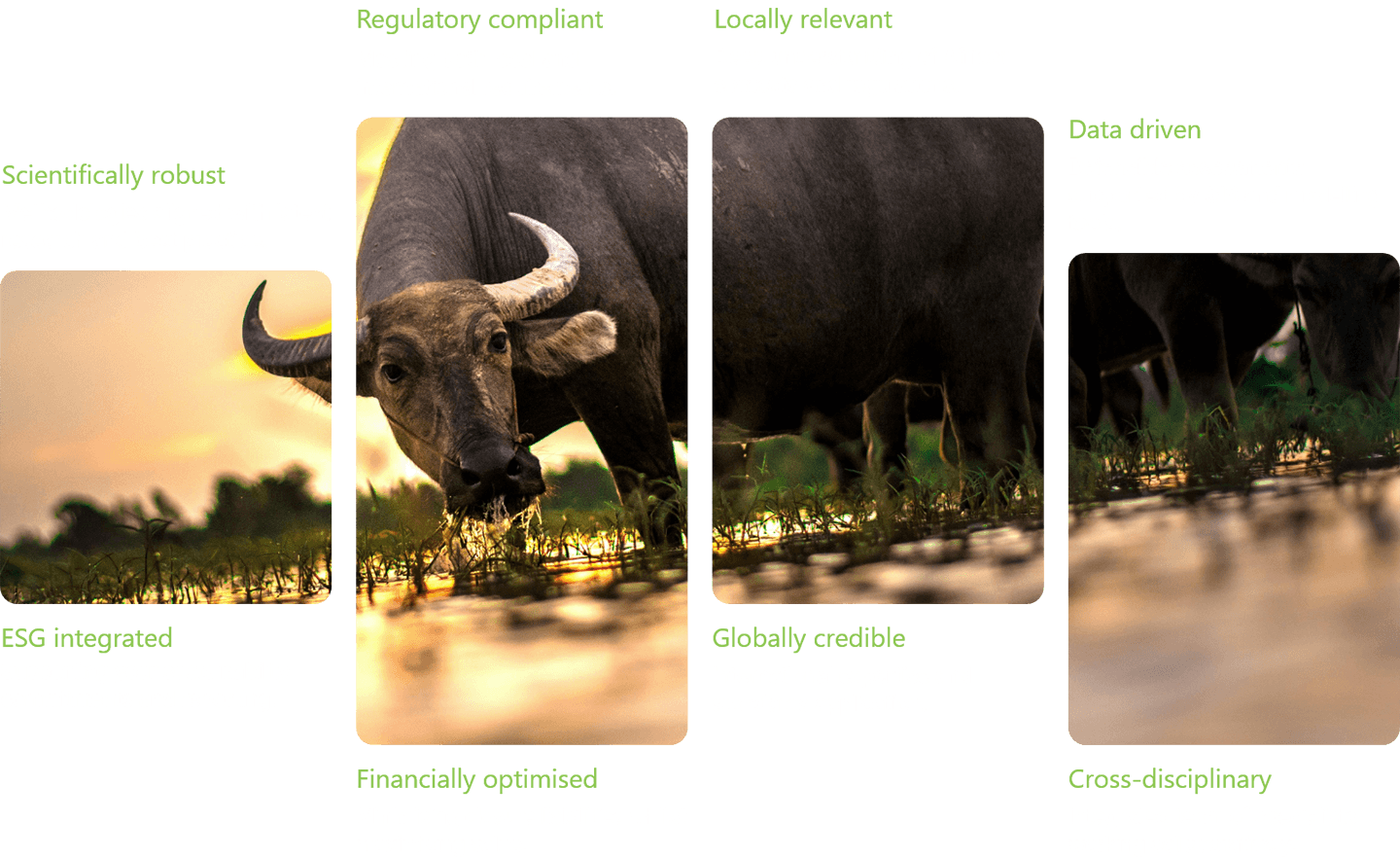
Scientifically robust
Methodologies aligned with latest research and best practice.
Regulatory compliant
Meeting both local and international requirements.
Locally relevant
Deep understanding of African contexts and regulations.
Data driven
Defensible assessments supported by GIS and modelling tools.

ESG integrated
Supporting your sustainability commitments and reporting.
Financially optimised
Minimising closure liabilities whilst maximising value.
Globally credible
International expertise and standards application.
Cross-disciplinary
Integrated team of specialists working collaboratively.
GET STARTED
Take action!
Transform your rehabilitation, soils, wetlands, hydroped and closure challenges into opportunities for value creation.
Contact our Rehabilitation, Closure and Natural Sciences team to develop a comprehensive land and water management strategy that protects value whilst ensuring compliance.
Leon Ellis
Divisional Manager: Closure and Rehabilitation
RELATED PRODUCTS