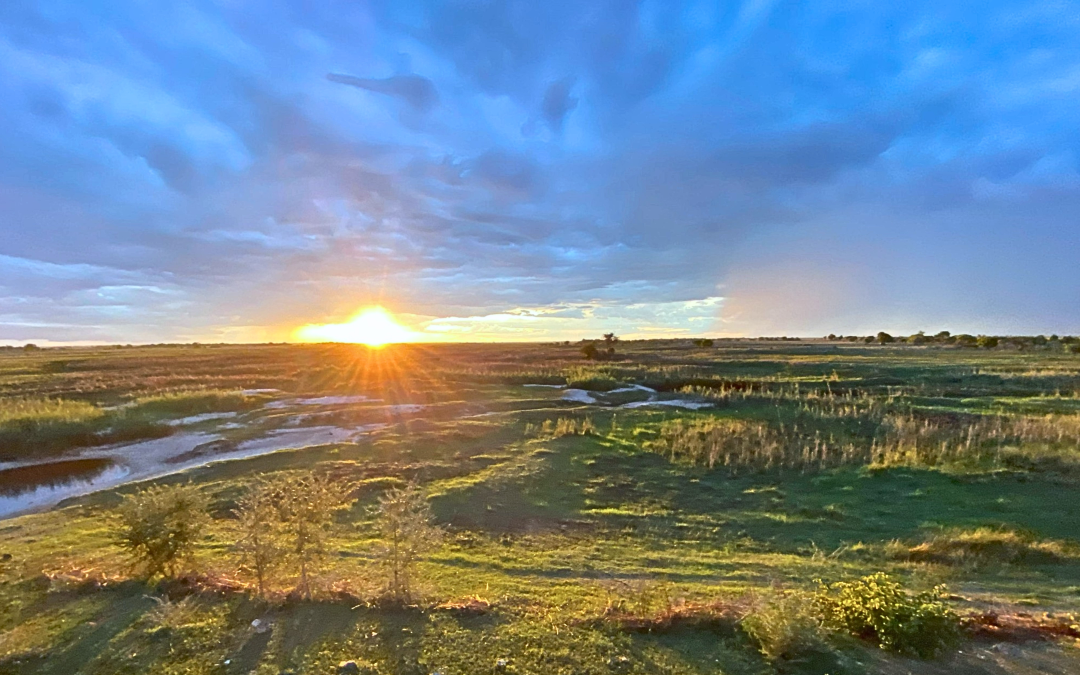
When Deserts Flood: Climate Change in Arid Regions

When Deserts Flood: Climate Change in Arid Regions

In recent years, desert regions around the world have experienced an unexpected rise in extreme flooding events. From North Africa to the Arabian Peninsula and the Australian Outback, areas once synonymous with aridity are now grappling with flash floods and record-breaking rainfall.

These events stand out not only for the unusual regions they impact but also for their growing frequency and intensity. They disrupt communities unprepared for such conditions, damage critical infrastructure, and challenge long-standing assumptions about desert climates (UNDRR, 2022) (WMO, 2023).

Examples of Desert Flooding

Case 1: Sahara Desert (Algeria and Morocco, September 2023)

Heavy rainfall in parts of Algeria and Morocco led to flash floods that inundated desert villages and overwhelmed dry riverbeds. In some areas, over 100 mm of rain fell in just a few hours, a significant volume for a region that typically receives less than 200 mm annually. The floods damaged homes, roads, and agriculture, and led to several fatalities. The event was linked to a stalled low-pressure system and convective thunderstorms that rapidly developed in the unstable atmosphere (Reuters, 2023).

Case 2: Simpson Desert (Australia, January 2022)

Unusual summer rains, brought on by a La Niña-driven monsoon trough, dumped over 150 mm of rain in parts of the Simpson Desert, more than the region’s average annual rainfall. Roads became impassable, and some remote communities were cut off for days. The floods also triggered ecological shifts, including the sudden appearance of wetland birds and blooming wildflowers. This event was influenced by a combination of tropical moisture surges and mesoscale convective systems (Bureau of Meteorology Australia, 2022).

Case 3: Namibia (Central Desert, March 2021 and 2025)

Floodwaters surged through central Namibia following an intense downpour. Swollen rivers burst their banks, affecting both rural and urban areas, especially near Windhoek. The event caused significant damage to roads, informal housing settlements, and sanitation systems. Meteorological analyses pointed to a rare convergence of tropical air masses and upper-level troughs that enhanced rainfall (Namibia Meteorological Service, 2021).

Case 4: Oman (Dhofar and Al Wusta regions, May 2020)

Tropical Cyclone Nisarga brought unseasonably intense rainfall to Oman’s desert interiors. Normally parched wadis transformed into raging torrents. Flooding displaced thousands and disrupted power and water services. The flooding was driven by tropical cyclone activity, a phenomenon that has shown signs of increasing in strength and inland reach due to warming ocean waters (Oman Meteorology, 2020).

What Causes Dessert Flood Risk to Increase?

Scientific research shows that climate change is altering rainfall patterns in arid regions. Warmer oceans intensify the hydrological cycle, increasing atmospheric moisture, which can lead to heavier rainfall even in dry regions.

Changes in atmospheric circulation, such as shifts in the jet stream and weakening of the subtropical high-pressure zones, also contribute to unusual rainfall patterns. In some cases, warming in the Indian Ocean or Pacific (e.g., ENSO events) enhances tropical convection, pushing moist air into typically arid areas.

Deserts are not immune to these global changes. Instead, their extreme dryness and low absorption capacity make them especially vulnerable to flooding (IPCC, 2023) (NOAA, 2023)

Impacts and Risks

Recent floods have exposed the vulnerabilities in desert communities. Many areas lack basic stormwater infrastructure and outdated assumptions about local climates often shape urban planning and zoning.

Economically, floods disrupt transport routes, agricultural productivity, and tourism. Socially, they disproportionately affect poorer communities especially those living in informal settlements in high-risk areas.

Common challenges include:

  • Limited stormwater management.
  • Weak emergency response systems.
  • Inadequate zoning and building codes; and
  • Poor early warning mechanisms.

Managing Desert Flood Risk: Integrated Strategies That Work Integrated Flood Risk Assessments (IFRA) are essential in desert areas where baseline data is often sparse and communities may be unaware of emerging risks. These assessments combine climate projections, hydrological modeling, and vulnerability mapping to inform adaptive planning.

In many low-income or remote contexts, simple and affordable measures, like community-based early warning systems, basic improvements to key drainage points, or restoring natural catchments, can be more feasible than large-scale infrastructure. Nature-based solutions and incremental upgrades to planning codes can also build resilience without imposing high costs. Local ownership and regional cooperation are essential to make risk reduction realistic and sustainable.

Supporting Practical, Local Solutions: Policymakers and planners may find it helpful to support strategies that align with local capacities and community priorities. These can include:

  • Gradual upgrades to critical infrastructure where possible.
  • Integrating climate risk into development plans.
  • Encouraging community-led weather monitoring and emergency preparedness; and

Sharing knowledge regionally to strengthen local capacity.

Future Outlook: Building Knowledge and Capacity

Looking ahead, flooding in arid regions is expected to become more frequent as global temperatures rise. Preparing for previously improbable scenarios will be increasingly important.

Ongoing research will help clarify:

  • The evolving relationship between warming oceans and desert precipitation.
  • Long-term ecological shifts following flooding events; and
  • Effective low-cost adaptation strategies for developing countries.

Deserts and Flooding: A Changing Paradigm

Flooding in deserts is no longer an anomaly, it’s part of a shifting climate reality. These events highlight the need to rethink how arid environments are defined, planned for, and protected. Combining scientific research with local knowledge and flexible, inclusive planning can help ensure desert communities are better prepared for a changing future. (Nature Climate Change, 2023) (WMO, 2023).

About the Author: Nompumelelo Dube is a seasoned Hydrologist with over 18 years of experience in hydrology and hydraulic modelling across public and private sectors in Africa.  She has led water-related projects involving flood risk assessments, stormwater management, water balance modelling, and climate risk solutions for diverse clients including mining companies, municipalities, and international development agencies. Nompumelelo currently leading a team of Hydrologist at Digby Wells Environmental. She holds an Honours degree in Hydrology, a BSc in Hydro-Sciences, and a Postgraduate Diploma in Business Leadership. She is a registered natural scientist and a member of the Water Institute of Southern Africa.

Rethinking Water Risk: Charting the Path Forward

Rethinking Water Risk: Charting the Path Forward

This is the final article in our ‘Rethinking Water Risk’ series. The previous article, Tensions and Tributaries (Part 5) can be read here.

Throughout this series, we have unpacked the many faces of water risk, from physical scarcity and regulatory pressures to financial exposure, reputational threats, technological shifts and geopolitical dynamics. What has become clear is that these risks do not exist in silos. They are interconnected, intensifying each other in ways that demand a more integrated, forward-thinking response.

Effective water-risk management necessitates a shift from isolated approaches to integrated action. The opportunities that can be identified from business-specific risks should inform every aspect of the decision-making process, from location selection to operational management, value-chain planning, and strategic investment.

Building Resilience Through Action

Businesses that rethink water risk not as a cost or constraint but as a core strategic issue will be better equipped to navigate an increasingly water-stressed world. Resilience is built by understanding and acting on the specific risks that affect each operation and supply chain and by embedding this insight into daily decisions and long-term plans.

Companies can strengthen their water resilience by:

  • Understanding the local and regional basin and operational risks,
  • Diversifying water supply sources,
  • Improving water efficiency and conservation,
  • Engaging in water stewardship partnerships,
  • Investing in climate adaptation and resilient infrastructure,
  • Integrating water risks into business planning and strategies,
  • Ensuring compliance with evolving regulations, and
  • Leveraging technology and innovation.

By prioritising risks, businesses can develop strategies that not only mitigate water-related challenges but also create sustainable opportunities for the future.

From Compliance to Value Creation

This series has highlighted how water, when managed proactively, becomes a lever for resilience, reputation, and competitive advantage. Innovation, robust scenario planning, and meaningful engagement with stakeholders all play a vital role in this shift.

Ultimately, water needs to sit at the centre of how we plan, operate, and grow. Adaptive management, clear accountability and continuous improvement will distinguish leaders from those who remain reactive.

At Digby Wells Environmental, we partner with organisations to navigate this complexity, helping them move beyond compliance to build robust, future-focused water strategies.

What steps is your business taking to integrate water opportunities into its strategy?

About the Author: Megan Taylor is a Senior Hydrogeologist at Digby Wells Environmental, specialising in water geosciences. With over 15 years of experience across Africa and the Middle East, Megan has led hydrogeological assessments for major mining and infrastructure projects, including water supply and dewatering assessments, aquifer vulnerability studies, and environmental authorisations. She holds an Honours degree in Hydrogeology from the University of the Free State and is a registered Professional Scientist with SACNASP.

Part 5 – Tensions and Tributaries: Water Conflict & Business

Part 5 – Tensions and Tributaries: Water Conflict & Business

This is the fifth article in our ‘Rethinking Water Risk’ series. The previous article Overhead or Opportunity? (Part 4) can be read here.

Water does not recognise political boundaries – but its scarcity, mismanagement, and unequal distribution often intensify geopolitical tension. Geopolitical water risks are rising in prominence as global industries face growing exposure to transboundary water conflicts, shared basin governance failures, and infrastructure dependencies beyond their control.

These risks are particularly acute in regions where water flows across borders yet is governed by fragmented policies, asymmetrical power dynamics, or historical grievances. For businesses, this represents not just a physical risk, but a threat to operational continuity, regulatory certainty, and stakeholder trust.

Yet within these risks lies opportunity. Through basin-level cooperation and strategic water planning, cross-border projects can unlock shared benefits – from hydropower to ecosystem restoration.

“Where water flows across borders, so too must trust, equity, and shared responsibility.”

Table 0‑1: High Level Industry Breakdown of Impacts and Opportunities

Sector Industries Geopolitical Water Risks Opportunities for Resilience
Primary Mining, Agriculture Basin disputes, shared aquifer depletion, upstream diversions Bilateral agreements, shared catchment assessments, cross-border EIAs
Secondary Manufacturing, Utilities, Construction Transboundary allocation uncertainty, tariff exposure Water reuse investments, multinational Corporate Social Responsibility projects
Tertiary Technology, Healthcare, Tourism Reputational risk, water rationing, consumer backlash Community partnerships, disclosure transparency, water-neutral branding

To mitigate geopolitical water risks, businesses could incorporate the following into their strategies:

  • Basin-Level Cooperation: Engage in or support formal water-sharing agreements and regional dialogues.
  • Strategic Water Planning: Incorporate geopolitical scenarios into corporate risk frameworks – especially where assets depend on shared resources.
  • Diplomatic ESG Engagement: Build partnerships with national water agencies, NGOs, and neighbouring basin actors to co-develop inclusive water strategies.
  • Equity-Centred Impact Assessment: Ensure transboundary water projects fairly distribute benefits and minimise social and ecological harm.
  • Shared Data Systems: Advocate for and participate in cross-border water data transparency platforms.

Real World Impact

The complex nature of geopolitical water risks requires practical, context-specific solutions that are both collaborative and adaptive. Around the world, a growing number of cross-border initiatives are demonstrating how strategic cooperation can mitigate conflict, enhance water security, and create shared economic and social value. Below are several illustrative examples of basin-level cooperation and strategic water planning that highlight the importance of managing transboundary water systems:

  • Lesotho Highlands Water Project (Southern Africa): A binational initiative that supplies 780 million m³ of water annually to South Africa’s Gauteng region while supporting 51% of Lesotho’s power demand. However, dam construction has displaced communities and impacted river ecosystems – highlighting the need for adaptive governance during drought and shutdown periods.
  • Mekong River Commission (Southeast Asia): Facilitates cooperation among six countries. Companies operating in the basin use MRC assessments to plan water use and mitigate operational disruptions tied to upstream hydropower development.
  • Indus Waters Treaty (India-Pakistan): Despite geopolitical tensions, the treaty has endured since 1960, allowing businesses and farmers on both sides to plan irrigation and water infrastructure with some predictability.
  • Blue Peace Initiative (Middle East, Africa): A Swiss-backed diplomacy platform promoting cooperative water management as a peacebuilding tool. Private sector actors are increasingly joining as partners to strengthen regional stability.
  • Danube River Basin (Europe): The International Commission for the Protection of the Danube River coordinates cross-border water quality and flood control efforts, benefiting industries from agriculture to tourism across 14 countries.

Implementation Tips 

Map Transboundary Dependencies: Identify all water sources that traverse borders or are influenced by upstream participants.

    1. Integrate Water Diplomacy into ESG: Treat water diplomacy not as a state function alone but as part of corporate ESG due diligence.
    2. Support Local Water Rights: Ensure projects engaging with shared water bodies include community voices from both sides of the border.
    3. Engage in Transparency Initiatives: Participate in data-sharing platforms or voluntary disclosure schemes to build basin-wide trust.
    4. Plan for System Stress: Include contingency planning for shutdowns, droughts, or disruptions linked to cross-border infrastructure or agreements.

Water insecurity is increasingly shaped by geopolitics. For companies relying on transboundary water flows, geopolitical water risks are a strategic challenge – and an opportunity for transformative cooperation.

By investing in basin-level cooperation, inclusive governance, and robust scenario planning, businesses can mitigate uncertainty, build resilience, and unlock shared value across communities and supply chains. In a world where water binds nations and industries alike, strategic collaboration is essential.


About the Author: Megan Taylor is a Senior Hydrogeologist at Digby Wells Environmental, specialising in water geosciences. With over 15 years of experience across Africa and the Middle East, Megan has led hydrogeological assessments for major mining and infrastructure projects, including water supply and dewatering assessments, aquifer vulnerability studies, and environmental authorisations. She holds an Honours degree in Hydrogeology from the University of the Free State and is a registered Professional Scientist with SACNASP.

Resettlement Planning: Working with Governments

Resettlement Planning: Working with Governments

At Digby Wells Environmental, our work across more than 300 resettlement projects in 77 countries has consistently shown that government is not just a stakeholder in resettlement. It is a structural force that often determines what is feasible. Even with extensive experience, recent projects have reminded us that the realities of government engagement demand deeper strategic thinking.

While early engagement, senior official support, and capacity-building are widely recognised as essentials, these elements must be considered within the broader political and institutional landscape. We regularly encounter entrenched power dynamics, conflicting departmental agendas, and a disconnect between national policy commitments and local implementation. Government officials often act based on internal positioning, career considerations, or departmental rivalries; factors that may have little to do with the project itself.

A South African project illustrated this vividly. Initially, our focus was on engaging mid-level officials, who we believed would be practically involved in implementation. This approach seemed logical. However, in retrospect, we realised that this strategy led to unproductive scrutiny and resistance. Many of these officials, eager to assert influence or prove their value, repeatedly questioned the project’s technical and procedural steps. What became clear is that early involvement of senior-level decision-makers, who were often more constructive and forward-looking, could have helped shape a more enabling environment and set a collaborative tone for their subordinates. The broader lesson is that actions taken by government officials are not always aligned with the content or quality of a project. Often, they are driven by agendas unrelated to the merits of the initiative, and while these agendas may not always be visible, they can exert significant influence over the engagement process.

Another layered challenge emerged in Ivory Coast, where district-level departments were tasked with conducting crop counts and land valuations. Beyond the technical coordination issues, we encountered capacity limitations and misaligned interdepartmental mandates. Building alignment required not only technical clarity, however ongoing relationship management and the flexibility to support institutional constraints. These were not roadblocks to be overcome once but realities to be managed over time.

A further complication arises when aligning projects to both international standards and national requirements. It is not enough to co-develop frameworks or aim for dual compliance; this is already expected. What often causes tension is government official concern that applying international standards may set a precedent, influencing the expectations for future state-led projects. One effective approach, as demonstrated by a large project our company undertook in Tanzania, is to clearly and consistently communicate the distinction: compensation measures required by national law are delivered as baseline, while enhancements required by international standards are clearly identified as additions. This clarity reduces resistance, as it signals that international provisions are project-specific, not precedent-setting for future public policy.

Ultimately, involving government in resettlement planning is not simply a procedural requirement. It is a process of navigating institutional complexity, anticipating political motivations, and maintaining transparency about standards and expectations. Effective partnerships are grounded not in ideal scenarios, however in a clear-eyed understanding of the system as it is. When approached with insight, patience, and intent, these engagements can foster outcomes that are both sustainable and credible; for governments, for project developers, and for affected communities.

About the Author: Jan Anton Hough is an experienced Digby Wells senior social scientist and resettlement practitioner who has more than 15 years of experience in SEIAs, SEBSs, RAP and LRP compilation and implementation. He obtained his Masters in Sociology from the University of Stellenbosch in South Africa in 2011 and has three ISI-listed academic publications. Throughout his career, Anton has been involved in many large-scale projects across sub-Saharan Africa and South Africa and has extensive legislative and field-based experience in many of the continent’s countries. His work is usually performed to the IFC’S PSs and WB’s Environmental and Social Standards. Anton has drafted reports and plans for review by institutions such as the IFC, European Investment Bank (EIB), Norwegian Investment Fund for Developing Countries (Norfund), African Development Bank (AfDB) and WB.

Part 4 – Overhead or Opportunity? The Upside of Water Innovation

Part 4 – Overhead or Opportunity? The Upside of Water Innovation

This is the fourth article in our ‘Rethinking Water Risk’ series. The previous article Beyond Scarcity (Part 3) can be read here

Water scarcity and pollution are no longer just environmental concerns – they have become material financial risks across primary, secondary, and tertiary sectors. From costly mine closure liabilities in the extractives industry to rising operational expenses in manufacturing and heightened scrutiny from ESG-focused investors, financial water risks are reshaping how companies plan, operate, and grow.

At the same time, the interplay between capital expenditure (CapEx) and operational expenditure (OpEx) in water strategies is shifting. Forward-thinking companies are now leveraging CapEx investments in smart water infrastructure to reduce long-term OpEx burdens, enhancing their financial resilience and environmental compliance.

Meanwhile, advances in AI for water risk monitoring, IoT-based smart metering, and satellite remote sensing offer promising tools for anticipating challenges and improving decision-making. But barriers to technology adoption (high capital costs, technical capacity and infrastructure gaps) persist, which raises critical questions around equity and access.

“The cost of water inaction is rising – strategic investment today protects profit, people, and the planet tomorrow.”

Table 0‑1: High Level Industry Breakdown of Impacts and Opportunities
Sector Industries Financial Water Risks Opportunities
Primary Mining, Agriculture Closure liabilities, supply shortfalls, fines for non-compliance CapEx investment in early closure planning, precision irrigation, AI-based risk modelling
Secondary Manufacturing, Utilities, Construction Water treatment costs, process disruptions, input scarcity Smart water systems, reuse technologies, digital twin modelling
Tertiary Technology, Healthcare, Tourism Reputational losses, investor scrutiny, service delivery interruptions ESG-aligned investment, transparent disclosures, resilient infrastructure design

Mitigation strategies for financial and technological water risks can include:

  • CapEx vs OpEx Water Strategies: Shift focus from reactive OpEx (e.g., penalties, emergency sourcing) to proactive CapEx (e.g., treatment plants, digital water platforms) to improve long-term return on investment.
  • Adopt Nature-Based Solutions: Constructed wetlands and riparian buffers offer cost-effective purification and stormwater management, with biodiversity and tourism co-benefits.
  • Leverage AI and IoT: AI in water risk assessment supports predictive analytics for supply fluctuations and compliance breaches. IoT-enabled systems improve efficiency through real-time monitoring.
  • Scenario Planning and Stress Testing: Use financial modelling to quantify water risks under various climate and regulatory scenarios, enabling better CapEx allocation.
  • Develop Closure-Integrated Financial Models: Especially in mining, integrate water and contamination risks into closure bonds to prevent cost externalisation.

Real World Impact

The Gravity Recovery and Climate Experiment (GRACE) technology, which required decades of algorithm development and advancements in technology and computational capabilities, provides large-scale data on changes in groundwater and surface water resources (NASA Earth Sciences, 2025). This remote sensing technology helps monitor the water resource dynamics of entire watershed and basin systems, providing valuable insights for decision-makers. The insights provided by GRACE technology enable specialists to develop more accurate adaptive climate and water management strategies, ensuring the sustainable use of water resources.

GRACE remote sensing technology has provided tangible benefits to businesses, communities and the environment globally:

  • Central Valley (California USA) – GRACE data is instrumental in monitoring the long-term groundwater depletion in Central Valley (an agriculturally productive region in the USA). The benefits of the monitoring data include:
    • Enabling managers and policy makers to track aquifer decline and identify unsustainable withdrawals;
    • Informed the Sustainable Groundwater Management Act and the development of water budgets and conservation plans;
    • Encouraged investment in smart irrigation and soil moisture technologies to reduce water stress.
  • Tigris-Euphrates River Basin (Turkey, Syria and Iraq) – GRACE data was used to identify the rapid depletion of freshwater resulting from the construction of dams, climate variability and groundwater extraction in the transboundary basin shared between Turkey, Syria and Iraq. This data was used to:
    • Provide neutral, science backed evidence in support of multilateral water dialogues, strengthening the advocacy for sustainable allocations and equitable basin management.
  • Sub-Saharan Africa – GRACE data contributed to the early detection of groundwater decline in regions like the horn of Africa and Sahel allowing:
    • Targeted water aid interventions such as drilling guidance for drought resilient water supply wells;
    • Provided a baseline for resilience-building projects and funds from the World Bank, and USAID;
    • Informed climate adaption programmes focussing on groundwater recharge and dry-land farming practices.

Implementation Tips 

  1. Conduct a Water Cost Audit: Assess the full financial impact of water-related disruptions, from supply volatility to reputational damage.
  2. Invest in Predictive Technologies: Begin with scalable, AI-enhanced tools to monitor water quality, flow, and usage trends.
  3. Align Water Risk with ESG Strategy: Incorporate water-related metrics into your ESG disclosures and financing negotiations.
  4. Engage Local Knowledge: Ensure CapEx decisions consider community water usage and traditional knowledge, particularly in resource-dependent geographies.
  5. Evaluate Financial Instruments: Explore green bonds or sustainability-linked loans tied to water efficiency and stewardship metrics.

Water-related challenges are no longer abstract environmental issues – they are concrete financial liabilities and opportunities. By proactively addressing financial water risks through innovative water strategies or leveraging remote sensing and AI in water risk assessments, businesses can build operational resilience, investor confidence, and community goodwill.

As pressure on global water systems intensifies, those who view water through a strategic financial lens – supported by data, foresight, and innovation – will lead the transition to a more sustainable and prosperous future.

About the Author: Megan Taylor is a Senior Hydrogeologist at Digby Wells Environmental, specialising in water geosciences. With over 15 years of experience across Africa and the Middle East, Megan has led hydrogeological assessments for major mining and infrastructure projects, including water supply and dewatering assessments, aquifer vulnerability studies, and environmental authorisations. She holds an Honours degree in Hydrogeology from the University of the Free State and is a registered Professional Scientist with SACNASP.